
USDA Dietary Guidelines 2026: What You Need to Consider Before Changing Your Diet
CONTENTS
- Every Day, Animals Suffer in the Name of Medical Research
- A Study from Switzerland Changed the Conversation
- “THATS THE WAY WE’VE ALWAYS DONE IT”
- Why Are We Still Experimenting on Animals as the Default?
- The Problem No Experimental Design Can Eliminate
- What Science Has Taught Us About Animals
- Animals Are Not Unfeeling Research Tools
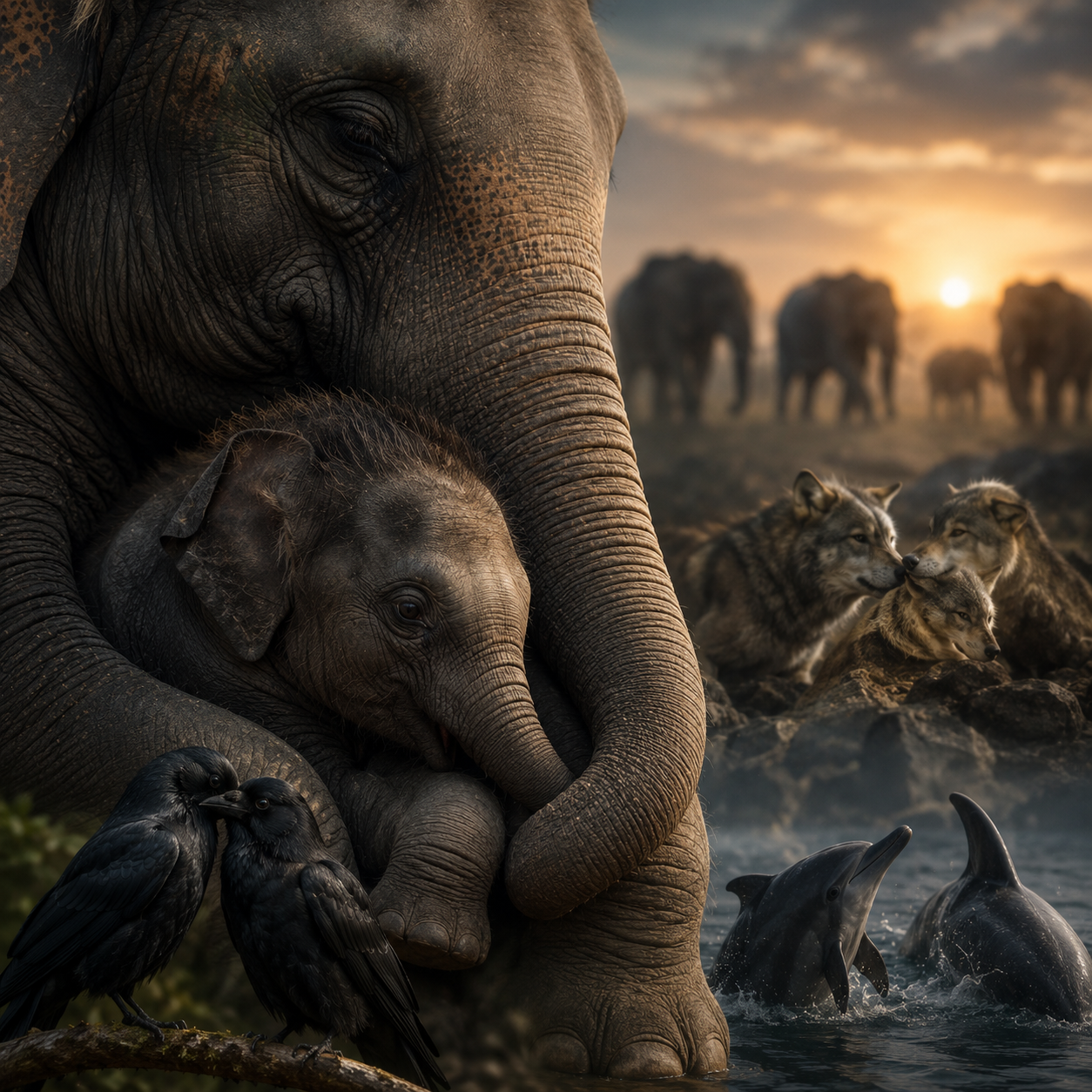
- Families and Social Bonds Matter to Animals
- Animals Respond to the Emotions of Others
- Animals Experience More Than Physical Pain
- What We Know About Consciousness Has Changed
- Science Has Changed the Ethical Equation
- The Cost of Getting It Wrong
Summary
For nearly a century, animal testing has been treated as a necessary step in developing new medicines. Most people assume that when a treatment works in animals, it has a good chance of helping people.
The evidence tells a more complicated and troubling story.
A major 2024 analysis found that only 5% of animal-tested therapeutics intended for human use ultimately received regulatory approval for use in humans. At the same time, decades of research have transformed what we know about animals themselves. Non-human animals experience pain, fear, stress, attachment, pleasure, curiosity, and social loss. They form relationships, recognize familiar individuals, communicate, cooperate, and respond to the emotions of others.
Animal testing must therefore be evaluated through two equally important lenses:
Does it provide reliable information about human health?
And is the expected benefit great enough to justify the suffering it causes?
What You’ll Learn
- How animal testing became embedded in medical research
- What the best evidence is about animal-to-human translation
- Why animal studies often fail to predict human outcomes
- What science has revealed about animal consciousness and emotions
- Why social separation and laboratory stress matter
- How new knowledge has changed the ethical defense of animal testing
Every Day, Animals Suffer in the Name of Medical Research
Across the world, animals are bred, confined, experimented on, and killed in the name of medical research.
Most people accept this because they believe those animals are helping scientists discover lifesaving treatments.
It is an uncomfortable bargain.
- Animals suffer.
- People benefit.
Or at least, that is what we have been told.
For decades, animal testing has been viewed as an unavoidable step in developing medicines. When the federal government strengthened drug safety laws in 1938, researchers had few alternatives.
- There were no organs-on-chips.
- There were no advanced computer models.
- Scientists could not grow organ-like human tissues in laboratories.
- Artificial intelligence did not exist.
When researchers needed to understand how a drug might affect a living body, animals were often the only practical option.
At the time, that choice made sense.
More than 80 years later, the world has changed.
Medicine has changed.
- Technology has changed.
- Our understanding of human biology has changed.
- Our understanding of animals has changed, too.
Yet animal testing remains embedded in the foundation of biomedical research.
The question is no longer whether it appeared reasonable in 1938.
The question is whether it remains the best science today.
When more human-relevant methods exist, continuing an old practice simply because it is familiar is not scientific caution.
It is institutional inertia.
A Study from Switzerland Changed the Conversation
For years, supporters and critics of animal testing have argued over the same question.
How well do animal studies predict what will happen in people?
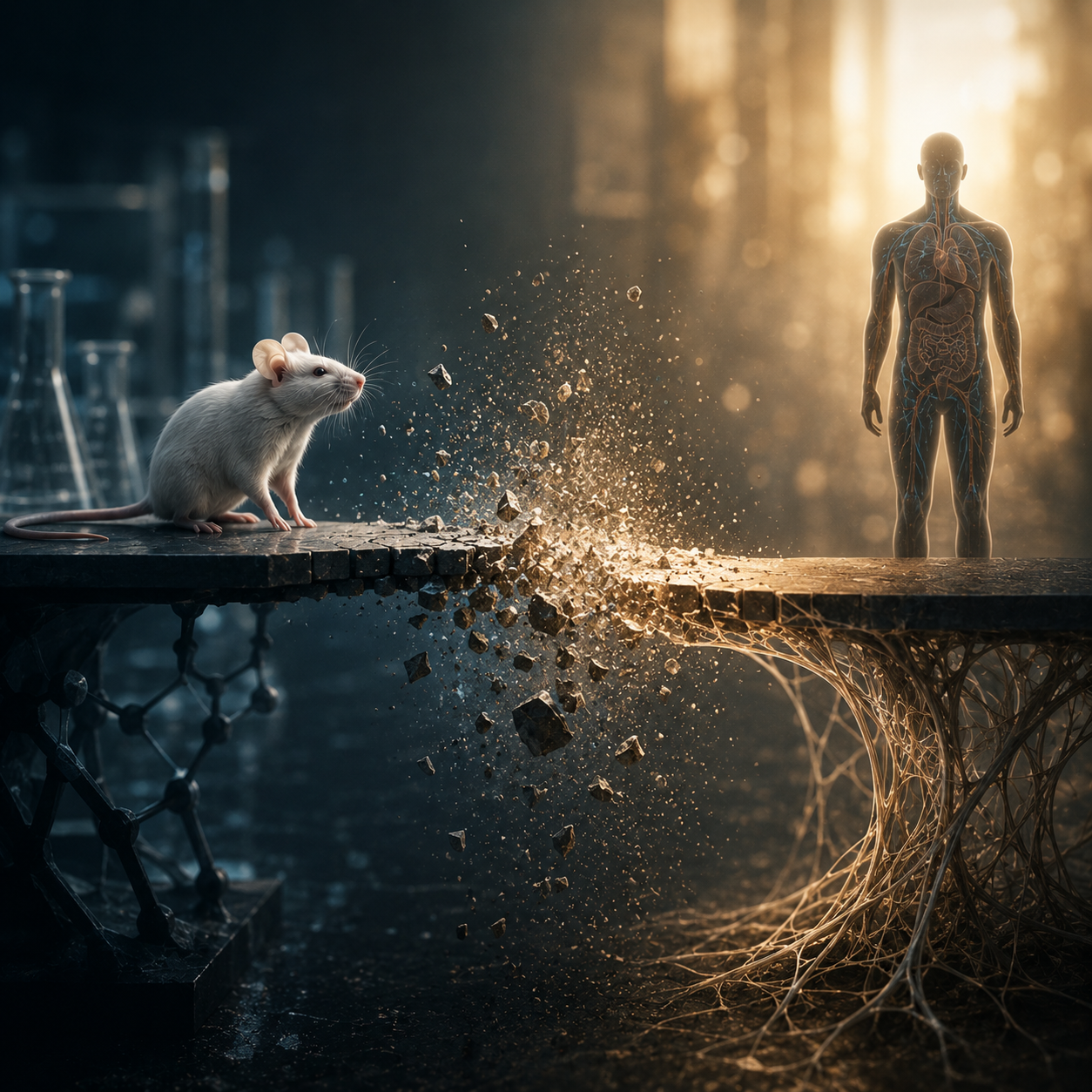
In 2024, researchers led by Benjamin V. Ineichen at the University of Zurich published one of the most extensive examinations of animal-to-human translation.
The PLOS Biology study, Analysis of Animal-to-Human Translation Shows That Only 5% of Animal-Tested Therapeutic Interventions Obtain Regulatory Approval for Human Applications, examined a substantial body of research:
- 122 systematic reviews
- 54 diseases
- 367 therapeutic interventions
- 4,443 animal studies
- 1,516 clinical studies
The researchers found that less than half of the animal studies produced enough useful information to reach a human randomized clinical trial (an important step on the path to evaluating the safety and efficacy of a new drug before approval for widespread use.)
And only 5% ultimately obtained regulatory approval for use in humans.
It is important to bear in mind that even after a drug is approved, recalls are common, as are unexpected side effects that cause significant harm to patients.
Patients do not need treatments that merely show promise in mice or zebrafish.
They need treatments that are safe and effective for humans.
Among the therapies examined, the median time from the first animal study to regulatory approval was approximately ten years for those that succeeded. Yet only a small minority reached that point.
After years of work, enormous financial investment (typically more than $1 BILLION) and extensive animal use, only one in 20 interventions examined in the analysis became an approved treatment.
That should force us to ask a difficult question.
Are animals suffering because their use remains scientifically necessary?
Or are many suffering because the research system has been slow to move away from the status quo and replace familiar methods?
“THAT’S THE WAY WE’VE ALWAYS DONE IT”
Drug development is difficult. It is expensive. But it is an investment.
Human biology is extraordinarily complex and intrinsically different in many ways from animals.
Treatments can fail for many reasons:
- Researchers may have targeted the wrong biological pathway.
- The relevant pathway in humans may not even exist in the animal model.
- A dose may be ineffective.
- Unexpected toxicity may appear.
- A drug may work but provide too little benefit to justify its risks.
Not every failed clinical trial proves that the preceding animal research had no value.
However, repeated failure should prompt honest questions about the models used to select treatments for human trials.
The FDA now describes a transition toward human-relevant New Approach Methodologies (also called NAMs, or Non-Animal Methods), noting that more than 90% of drugs considered safe and effective in animals fail in humans.
Examples of NAMs include:
- AI-powered models
- Organs-on-chips
- Real human tissues
The massive “translation gap” that is inherent in all animal tests is bypassed using NAMs.
Imagine another field accepting a comparable mismatch without closely examining its testing process.
Imagine an aircraft manufacturer discovering that most designs passing preflight evaluation later failed under real passenger conditions.
No one would respond by saying engineering is difficult and continuing unchanged.
If this happened in aviation, investigators would:
- Study the tests.
- Question their assumptions.
- Identify which models predicted real performance.
- Identify which models did not.
Biomedical research deserves the same intellectual honesty.
Every unsuccessful treatment represents more than lost money.
It represents years of scientific effort.
It represents patients waiting for therapies that never arrive.
It may also represent animals subjected to pain, illness, isolation, fear, invasive procedures, or death for work that never produced the hoped-for human benefit.
The ethical argument for animal testing depends heavily on scientific value.
When that value is uncertain, the moral calculus changes radically.
Why Are We Still Experimenting on Animals as the Default?
The answer is not simply that scientists lack imagination.
- Animal testing is supported by an entire research ecosystem and is a MULTIBILLION dollar industry. As such, many individuals and organizations stand to lose a LOT of money, and hold and so defend the gravy train status quo of outdated research methodology.
- Universities have built animal facilities.
- Researchers have developed careers around particular animal models.
- Government agencies have created rules and review systems around animal data.
- Scientific journals are accustomed to publishing it.
- Pharmaceutical companies have established drug discovery and development protocols that incorporate it.
- Grant reviewers understand familiar methods.
- FDA Regulators know how to interpret familiar evidence.
Over time, animal testing became the default.
Large systems develop momentum and funding and research practices continue along the path of least resistance, as long as the money keeps flowing.
- Careers depend on existing expertise.
- Institutions invest in equipment, facilities, and personnel.
Even when a promising new method becomes available, using it may appear riskier than staying with the old system. Humans are hard wired to fear what is new, and find comfort in the familiar.
- A scientist may believe a human-cell model is more relevant but fear that grant reviewers will not accept it.
- A pharmaceutical company may hesitate to invest in a new platform without clear regulatory guidance.
- A regulator may support innovation but still ask for traditional animal data as reassurance.
Each decision may appear cautious on its own.
Together, they preserve the status quo.
This does not require bad intentions.
It only requires a system that rewards familiarity.
The Problem No Experimental Design Can Eliminate
Animals are not humans.
Animal testing often depends on extrapolating a biological response from one species to another.
Different species can differ in fundamental ways:
- How they absorb substances
- How they distribute substances throughout the body
- How they metabolize substances
- How they eliminate substances
- How their immune systems respond
- How their genes are regulated
- How their organs react to disease or treatment
Even nonhuman primates have important differences from humans in immunity, physiology, genetics, and disease progression.
A mouse is not a small human.
A monkey is not a human with more hair.
Every species is the product of its own evolutionary history.
Those differences can affect research outcomes in several ways:
- A treatment may shrink a tumor in mice and fail in people.
- A compound may appear safe in an animal but damage a human organ.
- A vaccine may protect a nonhuman primate against a related virus but fail to prevent human infection.
- The reverse can also happen. A potentially useful medicine may be abandoned because it harms an animal species through a mechanism that is not relevant to people.
No amount of laboratory precision can erase biological differences between species.
What Science Has Taught Us About Animals
The scientific case for reexamining animal testing does not rest only on poor translation.
It also rests on what we have learned about the animals themselves.
For many years, discussion of animal welfare centered mainly on whether animals felt physical pain.
That question is no longer seriously in doubt.
Today, scientists study much more than pain. They examine:
- Fear
- Pleasure
- Stress
- Attachment
- Social recognition
- Emotional communication
- Learning
- Memory
- Anticipation
- Other subjective states
A systematic review of more than two decades of scientific literature found that animal sentience was not merely a philosophical idea. Animals’ subjective states were being measured and used throughout scientific research, including studies intended to improve human medicine.
The question is no longer whether animals respond to harmful stimulation.
The question is how much they experience and how those experiences should affect our treatment of them.
Animals Are Not Unfeeling Research Tools
Animals used in research are living individuals with their own biological and behavioral needs.
They:
- Seek food, safety, comfort, stimulation, and social contact
- Avoid threats
- Learn from previous experiences
- Remember people, places, companions, and procedures
- May become fearful before an event occurs because they recognize the environment, handler, sound, or routine that predicts it
Researchers can now assess emotional states through:
- Behavior
- Vocalizations
- Facial expressions
- Body posture
- Physiology
- Cognitive testing
Reviews of laboratory rodents describe increasing efforts not only to detect pain and distress but also to identify positive emotional states and improve the animals’ quality of life.
That shift matters.
An animal does not have to understand the purpose of an experiment to experience what is being done.
It does not have to think like a human to feel fear.
It does not have to speak to suffer.
Families and Social Bonds Matter to Animals
Many animals live in social worlds.
We see this across species:
- Primates form family relationships, alliances, friendships, and hierarchies.
- Young primates may depend on their mothers for protection, learning, food, and social development for years.
- Rodents distinguish familiar animals from strangers.
- Dogs develop strong attachments to humans and other animals.
- Pigs recognize individuals and learn through social observation.
- Farm animals display abilities involving social recognition, communication, learning, categorization, and problem-solving.
Social separation can therefore be more than a change in housing.
It can be a source of distress.
Research into the neurobiology of social behavior indicates that disrupting social bonds can produce negative emotional and physiological responses. Social stability and support from familiar animals may improve stress coping, health, and immune function.
This has profound implications for laboratory research.
A highly social animal housed alone is not simply occupying a smaller social environment.
It may be deprived of something central to its normal life.
A mother separated from her offspring is not an interchangeable biological specimen moved from one enclosure to another.
A primate removed from a familiar group may lose relationships that mattered to that animal.
Science can no longer pretend that those losses are irrelevant simply because they cannot be expressed in words.
In short, animals are more similar to humans than they are different.
"The question is not, 'Can they reason?' nor, 'Can they talk?' but, 'Can they suffer?'" – Jeremy Benthem
Animals Respond to the Emotions of Others
One of the most important developments in animal cognition has been the study of emotional communication.
Researchers have found that the ability to detect and respond to another individual’s emotional state is not unique to humans. Evidence of emotion recognition and related social responses has been reported in species ranging from primates to rodents.
In mice, studies have shown that pain behavior can be influenced by the presence and condition of familiar companions. This phenomenon is often discussed as emotional contagion or a basic form of empathy.
Such findings should be interpreted carefully. A mouse does not need to experience empathy exactly as a person does for the result to matter.
What matters is that one animal’s distress can affect another.
An experiment may therefore influence more animals than the individual receiving the procedure.
Cage mates may:
- Hear vocalizations
- Smell stress-related chemical signals
- Observe restraint or handling
- Respond to changes in the behavior of an injured or frightened companion
The laboratory is not populated by isolated biological machines.
It contains social beings that may react to one another.
Animals Experience More Than Physical Pain
Pain is only one form of suffering.
Other forms of distress matter too:
- Fear
- Anxiety
- Boredom
- Loneliness
- Frustration
- Loss of control
- The inability to perform natural behavior
An animal may experience distress before a procedure, during restraint, while recovering, or when returned to an altered social group.
Chronic stress can affect:
- Hormone levels
- Immune function
- Metabolism
- Behavior
- Sleep
- Brain activity
That means suffering is not only an ethical concern.
It can also become a scientific variable.
A frightened, isolated, or chronically stressed animal may respond differently to an infection, medication, surgery, or behavioral test than an animal living under less stressful conditions.
The more researchers attempt to control the laboratory environment, the more they may create a life unlike the one that shaped the species’ biology.
Standardization can reduce some forms of experimental variation.
It can also produce animals whose physiology has been altered by:
- Confinement
- Inactivity
- Social disruption
- Repetitive handling
- Impoverished surroundings
An animal’s emotional state does not disappear because a protocol does not measure it.
What We Know About Consciousness Has Changed
Scientists once treated animal emotions as too subjective for serious study.
That position has become increasingly difficult to maintain.
Researchers now investigate how animals:
- Perceive their environments
- Remember events
- Anticipate outcomes
- Make choices
- Communicate
- Experience positive or negative states
But there is still disagreement about the nature and extent of consciousness across species.
We should not claim that every animal has a human-like inner life.
We also should not make the opposite mistake.
The absence of human language does not prove the absence of experience.
Different species may experience the world in ways we cannot fully imagine.
Animals do not need human intelligence to have interests of their own.
They do not need to understand death as a person does for their lives to matter to them.
And they do not need human families for their social bonds to be meaningful.
Science Has Changed the Ethical Equation
None of these discoveries alone proves that all animal research must end immediately.
They do change what must be considered before it begins.
In 1938, scientists had far fewer research tools and a far more limited understanding of animal cognition and emotion.
Today, both circumstances are different.
Science Has Better Tools
Researchers have access to:
- Human cells
- Organoids
- Organs-on-chips
- Advanced imaging
- Computational models
- High throughput screening
- Artificial intelligence
Systems are advanced to the point that one can study the beating human heart, and gas exchange in a human lung among others.
One can study neurodegenerative diseases like Parkinson’s disease without having to literally break through the skull of a rat, and burn their brain, to artificially cause something that looks like Parkinson’s disease and study how different chemicals might work.
Scientists also know that many animals experience much more than a reflexive response to injury.
These developments cannot be considered separately.
The Ethical Defense Depends on Scientific Value
The ethical defense of animal experimentation has always depended on a difficult promise: that animal suffering is justified by meaningful benefits to human health.
We know that animals experience fear, stress, attachment, social separation, and other states earlier generations did not fully understand.
We also know that a large majority of animal models struggle to predict what will happen in people. Routinely.
An experiment should not be justified merely because it may produce information. Society has already rejected that standard in human medical research.
Scientific Information Alone Does Not Make Research Ethical
Some of the darkest chapters in medical history produced scientific information. That did not make the experiments ethical.
The medical experiments conducted on concentration camp prisoners during Nazi Germany helped lead to the Nuremberg Code, which established fundamental principles governing ethical human experimentation.
In the United States, the Tuskegee Syphilis Study became another powerful example.
Researchers followed Black men with syphilis to observe the course of the disease, even after effective treatment became available. The study became one of the historical abuses considered during the development of the Belmont Report, which established respect for persons, beneficence, and justice as fundamental principles of ethical human research.
The controversial hepatitis studies at the Willowbrook State School raised similar questions about vulnerable research subjects, consent, risk, and whether the pursuit of knowledge could justify exposing people to harm.
These cases were very different from one another, and they should not be treated as equivalent. Yet together with other abuses in medical research, they helped establish an important principle:
Scientific value alone does not make an experiment ethically acceptable.
Modern Ethical Research Requires More
Modern research involving people must consider:
- Risks
- Expected benefits
- Informed consent
- Vulnerability
- Whether risks can be reduced through alternative methods
The Belmont Report specifically calls for researchers to consider alternative ways of obtaining the knowledge they seek.
Why should the underlying principle disappear simply because the research subject is an animal?
Animals cannot give informed consent. They cannot understand why they are being restrained, infected, injured, isolated, or subjected to repeated procedures. They cannot decide that the possible benefit to someone else makes their suffering worthwhile.
That places the responsibility entirely on us.
The Questions We Should Be Asking
The relevant question cannot simply be, “Will we learn something?” Nearly any intervention can produce information.
- Is the information important enough to justify the harm?
- Is this animal model likely to provide meaningful information about human biology?
- Is there another way to obtain that information without using an animal?
- If a human-based method can answer the same question as well or better, what ethical justification remains for making an animal suffer?
Those are scientific questions.
They are also moral questions.
Animals should not pay the price for institutional comfort and tradition.
The Cost of Getting It Wrong
The consequences of an unreliable model do not fall on animals alone.
- Patients may enter trials based on evidence that does not translate.
- Promising treatments may fail after years of work.
- Potentially useful drugs may be abandoned.
- Research funding may continue flowing toward approaches that repeatedly disappoint.
- Families may read headlines announcing breakthroughs that never become treatments.
The full cost is carried by animals, patients, scientists, taxpayers, and everyone waiting for better medicine.
The pattern becomes especially visible in cancer, Alzheimer’s disease, sepsis, and HIV.
These fields do not prove that animal research has contributed nothing.
They reveal something more important.
Animal models can generate valuable knowledge without reliably predicting whether a treatment will help a human patient.
That distinction is the subject of Part 2.
Continue the Series
Part 2: When Animal Research Fails to Help People examines what cancer, Alzheimer’s disease, sepsis, and HIV reveal about the limits of animal models.